
Programme · Full-Length Performances · 2023
The Sea Like a Woman Shifts the Tiles of Her Jewels
Choreography: Sanja Petrovski
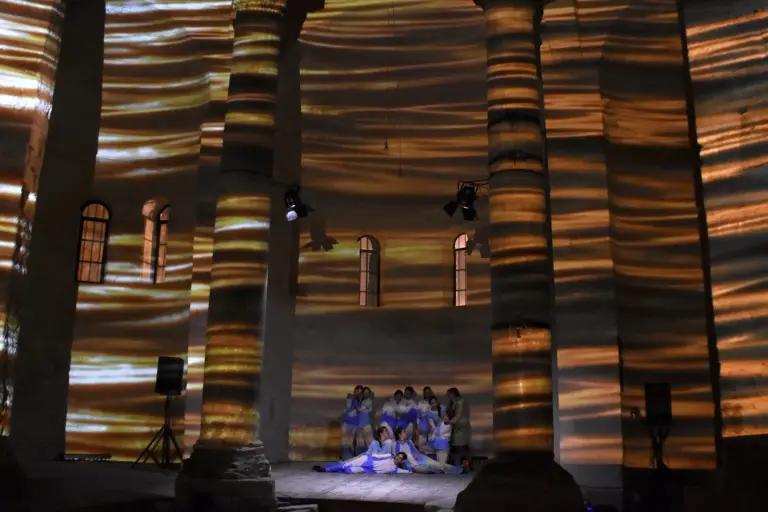
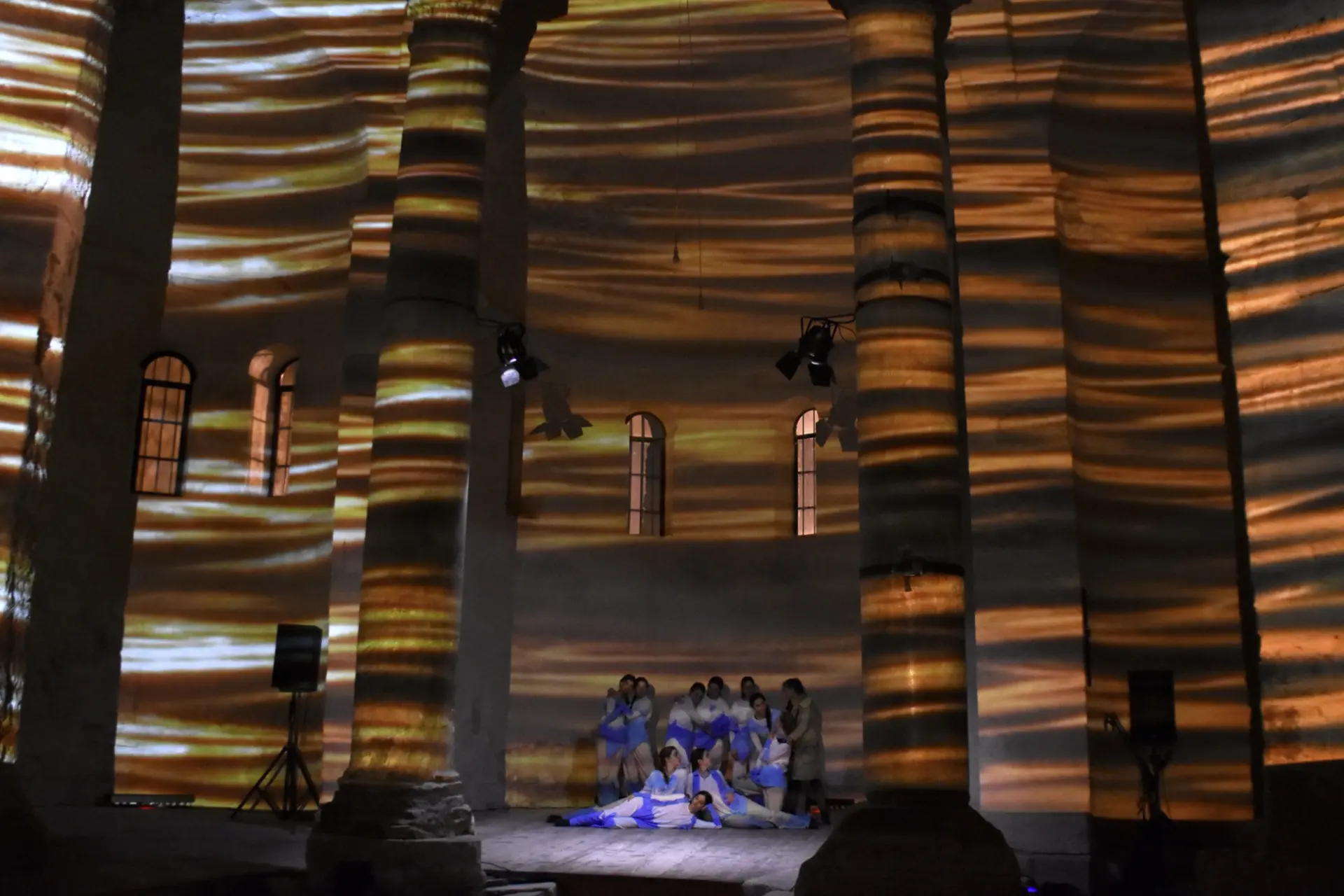
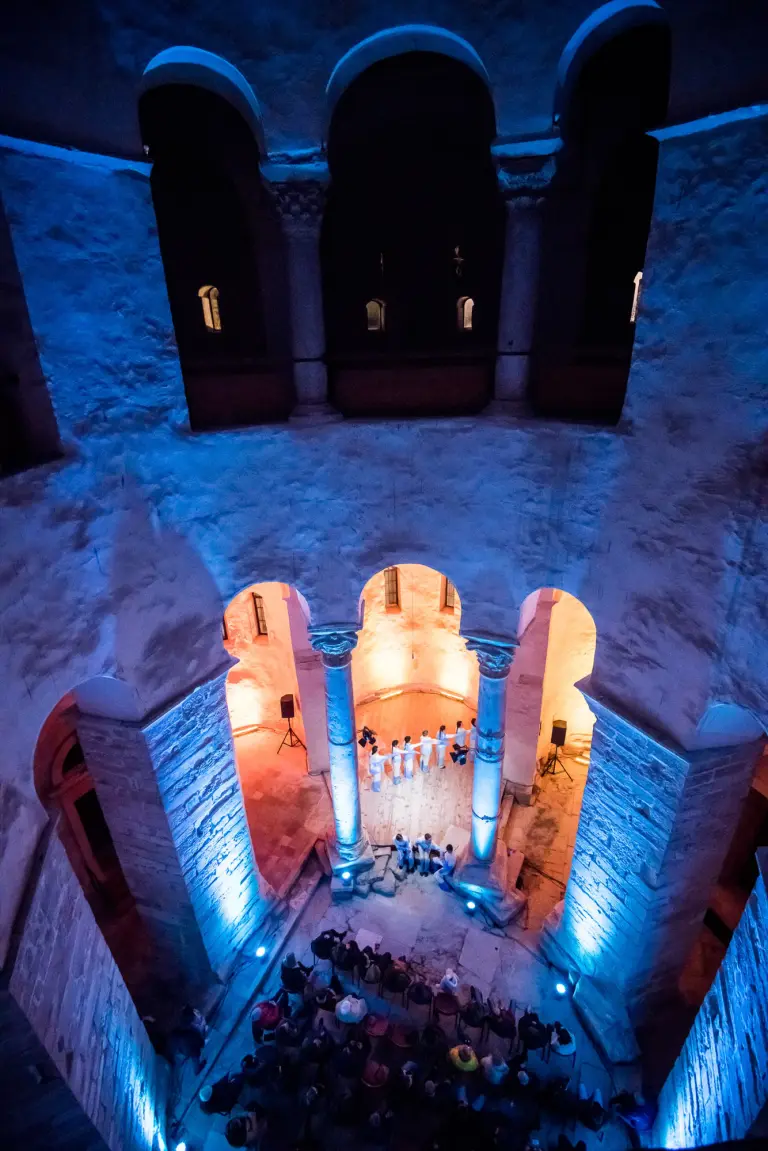
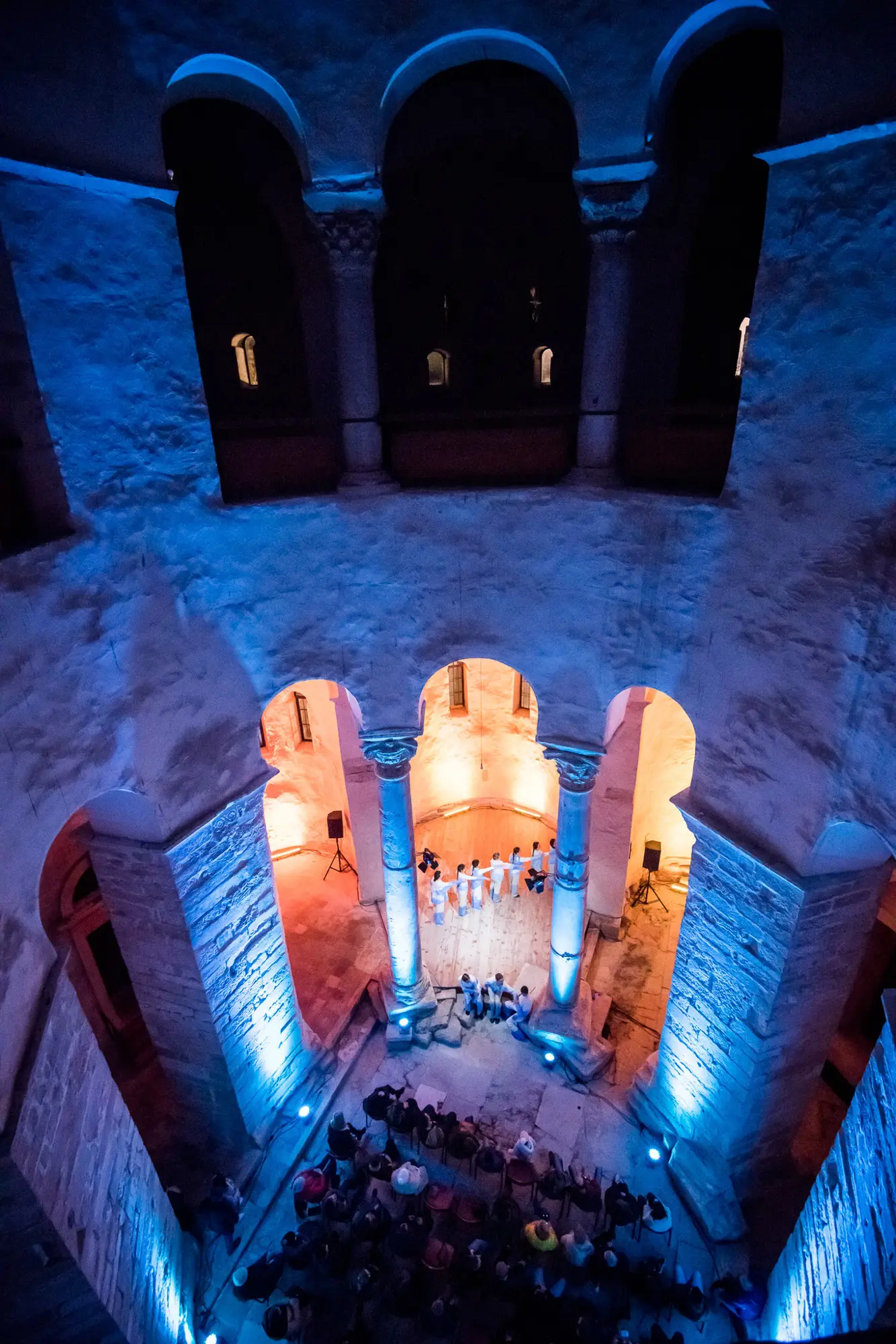
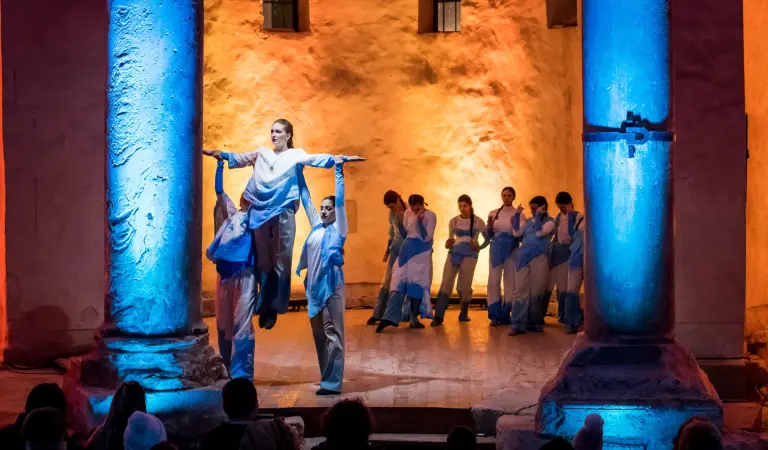
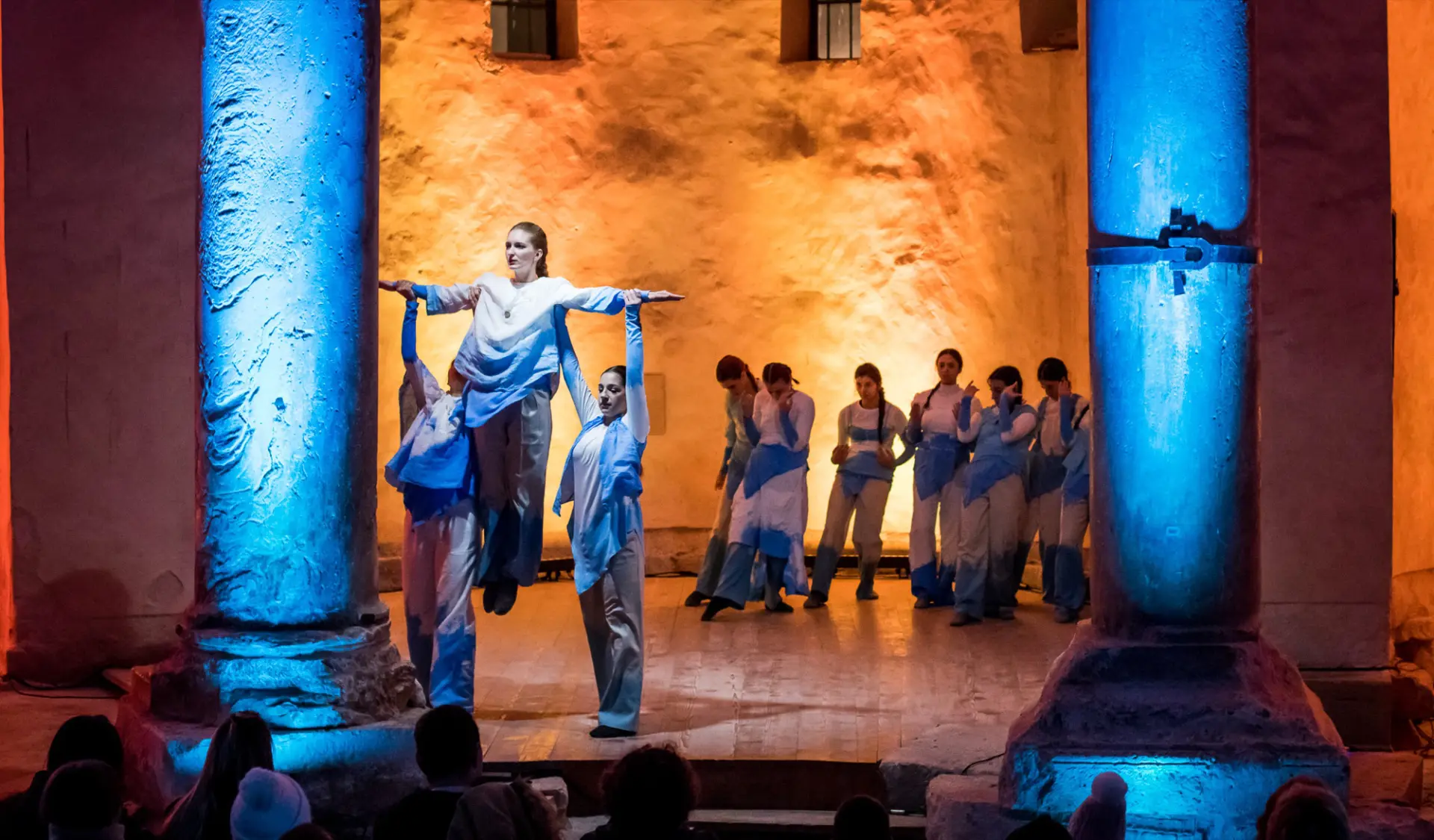
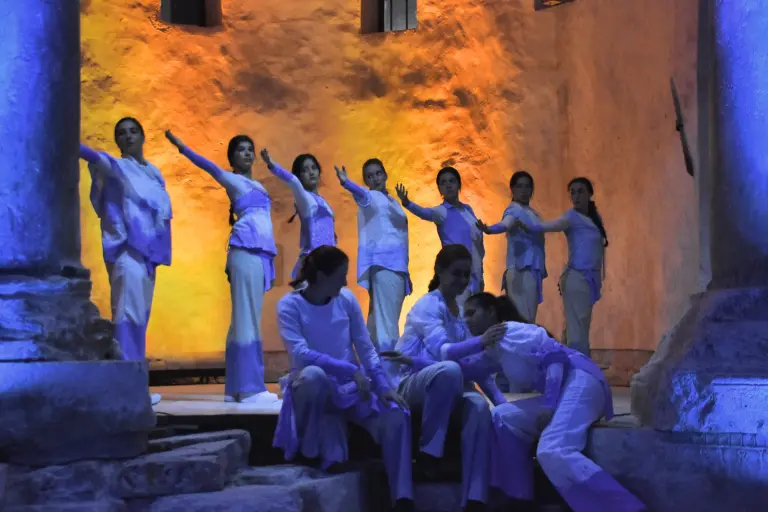
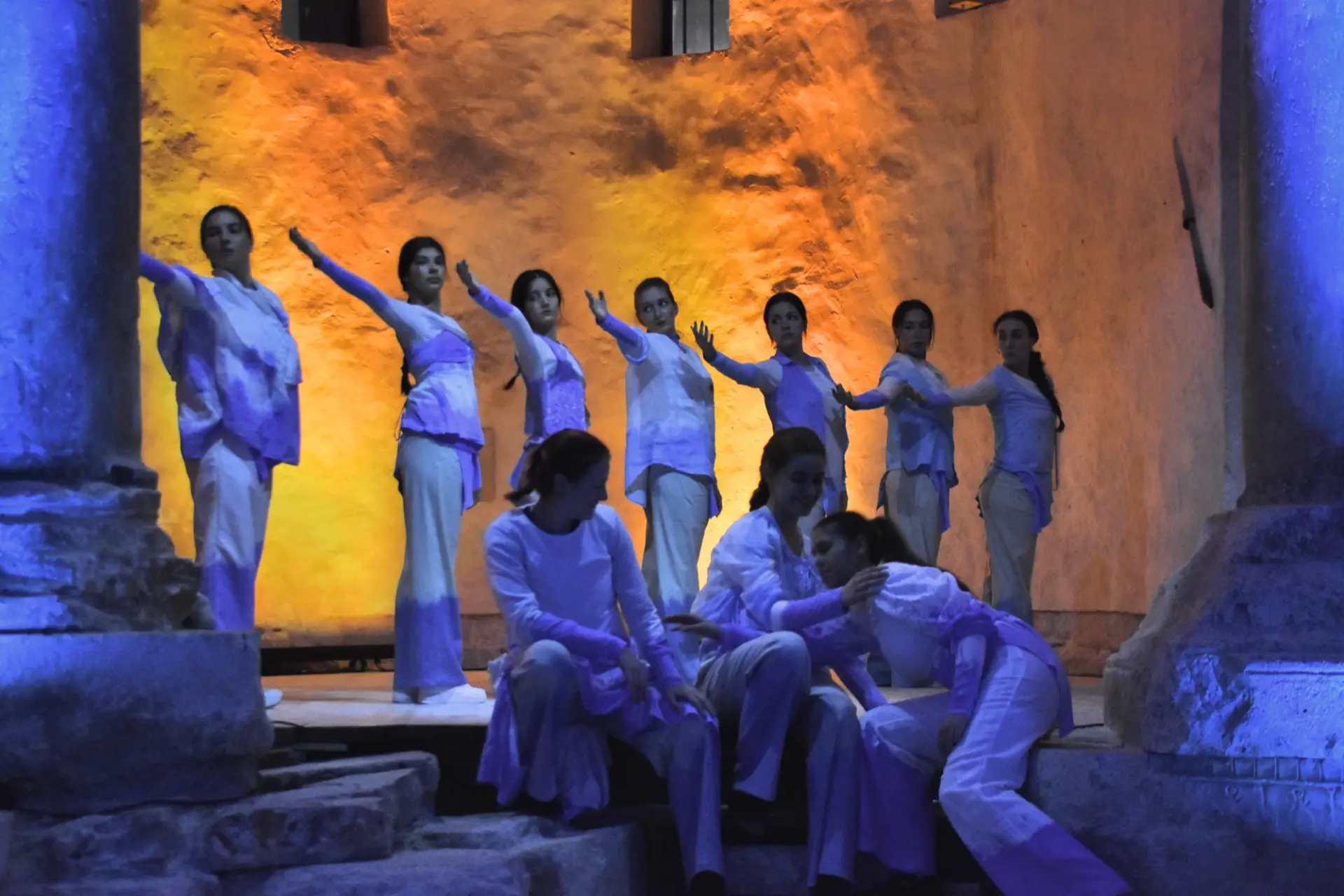
Photo: Aleksandar Bonačić Photo: Aleksandar Bonačić Photo: Aleksandar Bonačić Photo: Aleksandar Bonačić
A multimedia performance containing interdisciplinary elements that are united and made homogeneous by the concrete and at the same time abstract motif of the sea as a metaphor of life and an inexhaustible theme in its many meanings and its untameable nature. The inspiration for this full-length performance was the landscape poem Bonaca u predvečerje by Miroslav Krleža, whose atmosphere is evoked by light, image, movement and sound. Dance associatively and narratively connects the photographs of Aleksandar Bonačić and the video works of Petar Petrovski, which carry marine motifs, while the costume underlines the urban line of Mediterranean cities.
The research intention that guides this performance is supported by the ecological theme of a collective performance of self preservation and self sufficiency. A homogeneous group of about ten different personalities is gathered in a shared mission to recall, through their own body memory, the connection with the sea, and in that way to encourage collective memory to establish, through reflection, a connection with the space of the Mediterranean as the cradle of present day civilisation.
BONACA U PREDVEČERJE
The sea like a woman shifts the tiles of her jewels, In the shade of a sail she weaves a lacy foam.
Green blue, yellow and grey facets glisten, the water rocks the wooden rib of the boat with its lip.
At the bottom, in the darkness of the grey sea silt, sunken things stir and shine.
Above the blue mirror white birds are flying.
The water is heavy as a ring of oil.
From the funnel of the boat a wisp of soot billows, fish sizzles on the fire; a scent of resin and iodine.
The flicker of an eel of light, deaf and mute water.
On the open sea a sail, the shape of a ruddy ship and the white antenna of a lighthouse.
Below deck a fire. Laughter. An accordion.
Miroslav Krleža